Second session of the international cycle on hydrogen valleys: competitiveness models

Following the success of the first session dedicated to lessons learned in the configuration of hydrogen valleys, Hydrogen Territories Platform, in collaboration with the Clean Hydrogen Mission and the Spanish Hydrogen Valleys Alliance, announces the second session of the cycle, focused on competitiveness models.

From lessons learned to global competitiveness

On November 17th, Session 1 – Hydrogen Valleys: Lessons Learned in Their Configuration took place, bringing together leading international experiences such as BIG HIT (Scotland), BH2C, GREENHYSLAND, CylH₂Valley, and H₂ Chile. The session highlighted the importance of strategic planning, technological innovation, and public-private collaboration as fundamental pillars for the development of regional clean hydrogen ecosystems.

Participants gained first-hand insights into how different regions are designing and managing their hydrogen valleys, sharing best practices that can be replicated across Europe, Latin America, and other regions worldwide.

Session 2: building competitive and sustainable valleys

Having established the conceptual and strategic foundations, the cycle now advances toward a critical aspect for the global deployment of hydrogen: competitiveness.

📅 Date: December 1st, 2025
🕐 Time: 15:oo – 16:30
🔗 Registration link

What will be addressed in this session?

Session 2 – Hydrogen Valleys: Competitiveness Models will explore how to build hydrogen valleys that are competitive, sustainable, and capable of attracting investment to reach Final Investment Decisions (FID).

Agenda:

  • Hydrogen Territories Platform: Strategic framework for territorial hydrogen development
  • Hydrogen Valley Facility: Support instruments for hydrogen valley deployment
  • AdvancedH2Valley and other projects under deployment: Real experiences in Spain
  • E-fuels production as a seed for H₂ and CO₂ hubs: Insights from the HyFive project

Why is this session key?

Hydrogen valleys are considered a fundamental building block to accelerate the energy transition at regional and global scales. However, their success depends not only on technical capacity but also on factors such as:

  • Solid and scalable business models
  • Capacity to attract private investment
  • Integration of complete value chains
  • Generation of synergies across sectors (mobility, industry, energy)
  • Economic and environmental sustainability

This session will provide a clear vision of the criteria that determine hydrogen valley competitiveness, the available instruments to drive their maturity, and how these learnings can be applied in diverse international contexts.

A leading international cycle

The sessions dedicated to hydrogen valleys within the International Webinar Cycle of the Clean Hydrogen Mission, organized in collaboration with the Spanish Hydrogen Valleys Alliance, have become a reference space for understanding how different regions are shaping clean hydrogen ecosystems.

Through real cases, practical experiences, and shared learnings, these sessions enable participants from around the world to access actionable knowledge and connect with key players in the hydrogen ecosystem.


👉 Don’t miss this second session. Register here: Registration link
Second session of the international cycle on hydrogen valleys: competitiveness models

Following the success of the first session dedicated to lessons learned in the configuration of hydrogen valleys, Hydrogen Territories Platform, in collaboration with the Clean Hydrogen Mission and the Spanish Hydrogen Valleys Alliance, announces the second session of the cycle, focused on competitiveness models.

From lessons learned to global competitiveness

On November 17th, Session 1 – Hydrogen Valleys: Lessons Learned in Their Configuration took place, bringing together leading international experiences such as BIG HIT (Scotland), BH2C, GREENHYSLAND, CylH₂Valley, and H₂ Chile. The session highlighted the importance of strategic planning, technological innovation, and public-private collaboration as fundamental pillars for the development of regional clean hydrogen ecosystems.

Participants gained first-hand insights into how different regions are designing and managing their hydrogen valleys, sharing best practices that can be replicated across Europe, Latin America, and other regions worldwide.

Session 2: building competitive and sustainable valleys

Having established the conceptual and strategic foundations, the cycle now advances toward a critical aspect for the global deployment of hydrogen: competitiveness.

📅 Date: December 1st, 2025
🕐 Time: 15:oo – 16:30
🔗 Registration link

What will be addressed in this session?

Session 2 – Hydrogen Valleys: Competitiveness Models will explore how to build hydrogen valleys that are competitive, sustainable, and capable of attracting investment to reach Final Investment Decisions (FID).

Agenda:

  • Hydrogen Territories Platform: Strategic framework for territorial hydrogen development
  • Hydrogen Valley Facility: Support instruments for hydrogen valley deployment
  • AdvancedH2Valley and other projects under deployment: Real experiences in Spain
  • E-fuels production as a seed for H₂ and CO₂ hubs: Insights from the HyFive project

Why is this session key?

Hydrogen valleys are considered a fundamental building block to accelerate the energy transition at regional and global scales. However, their success depends not only on technical capacity but also on factors such as:

  • Solid and scalable business models
  • Capacity to attract private investment
  • Integration of complete value chains
  • Generation of synergies across sectors (mobility, industry, energy)
  • Economic and environmental sustainability

This session will provide a clear vision of the criteria that determine hydrogen valley competitiveness, the available instruments to drive their maturity, and how these learnings can be applied in diverse international contexts.

A leading international cycle

The sessions dedicated to hydrogen valleys within the International Webinar Cycle of the Clean Hydrogen Mission, organized in collaboration with the Spanish Hydrogen Valleys Alliance, have become a reference space for understanding how different regions are shaping clean hydrogen ecosystems.

Through real cases, practical experiences, and shared learnings, these sessions enable participants from around the world to access actionable knowledge and connect with key players in the hydrogen ecosystem.


👉 Don’t miss this second session. Register here: Registration link
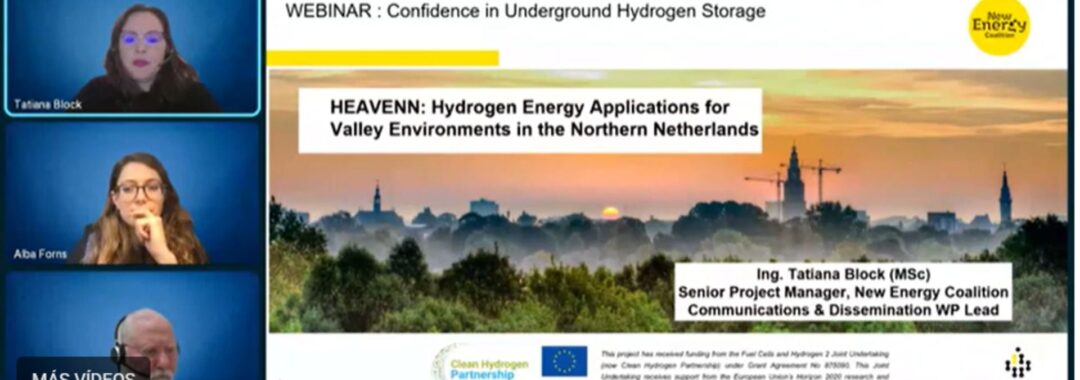
WEBINAR- Critical lessons in citizen engagement: perspectives from theHoogeveen green hydrogen district

Understanding the human factor: Practical insights on achieving public acceptance for Hydrogen Valleys in residential settings.

Topic Citizen Participation and Communication Strategies in Green Hydrogen Residential Projects.
Featured Speaker Kees Boer, Project Leader of the Hoogeveen Hydrogen District, Municipality of Hoogeveen.
Key Takeaways 1. How to effectively replace mass communication with targeted, one-on-one dialogues.
2. The role of collectively organized Residents’ Councils in project success.
3. The critical interdependence of Citizen Acceptance, Government Funding, and Research.
Context/Project Insights generated through the HEAVENN project, co-funded by the Clean Hydrogen Partnership.
Language English
Duration 60 minutes
Date November 26, 2025
Time 14:00 (CET)


Disclaimer

Disclaimer: Project co-funded by the Clean Hydrogen Partnership and the European CommissionThis webinar is part of HEAVENN. HEAVENN is funded by the Fuel Cells and Hydrogen 2 Joint Undertaking (now Clean Hydrogen Partnership) under grant agreement No. 875090. This Joint Undertaking receives support from the European Union’s Horizon 2020 research and innovation programme, Hydrogen Europe, and Hydrogen Europe Research. This page reflects the views only of the author, and the Fuel Cells and Hydrogen 2 Joint Undertaking (now Clean Hydrogen Partnership), under the powers delegated by the European Commission, is not responsible for any use that may be made of the information it contains.

Picture_Award-of-15-Hydrogen-Valleys-for-PDA-support

15 Hydrogen valleys selected for PDA in H2V facility’s first successful call

A total of 15 Hydrogen Valleys have been chosen to receive Project Development Assistance (PDA), following a successful first call from the H2V Facility, led by the Clean Hydrogen Partnership. This selection not only highlights the potential of these regional projects but also underscores the crucial role of technical assistance in consolidating the European hydrogen ecosystem.

The PDA is a dedicated tool designed to bridge expertise gaps in the early development phase. The selected Hydrogen Valleys, now backed by expert support in planning and execution, will significantly enhance their attractiveness to investors and financial institutions.

This achievement is a strategic step. By prioritizing assistance for 15 Valleys, the CHP is building a network of robust projects that will serve as reference models for future initiatives across Europe. The H2V Facility thus demonstrates its commitment to standardization and professionalization within the sector.

Key milestones:

  • Secured Funding: Improved bankability of projects.
  • Expert Assistance: Support in legal, technical, and financial aspects.
  • Risk Reduction: Accelerated deployment of hydrogen across the continent.
H2V-Knowledge-Centre

Clean Hydrogen Partnership launches H2V Knowledge Centre to accelerate hydrogen valleys

The European strategy for creating Hydrogen Valleys has received a significant boost with the introduction of the H2V Knowledge Centre by the Clean Hydrogen Partnership (CHP). This online knowledge hub is the missing piece needed to create operational synergy between existing and upcoming projects.

This repository is a sister initiative to the Project Development Assistance (PDA), managed by prestigious consortia such as Roland Berger and Worley. The information contained in the H2V Knowledge Centre—from business models and regulatory frameworks to detailed case studies—is curated to maximize the effectiveness of the technical assistance provided by the PDAs. The goal is clear: to standardize and professionalize the execution of the Valleys.

What Will You Find in the Knowledge Centre?

The H2V Knowledge Centre is structured to be the reference source for project developers, investors, and policymakers, ensuring that decisions are based on validated data and real-world hydrogen industry experience.

To Learn More:

Hydrogen-valley-leaders-to-meet-at-the-2025-HE-Conference-in-Gorizia-and-Nova-Gorica

Hydrogen valley leaders to meet at the 2025 HE Conference in Gorizia and Nova Gorica

The Hydrogen Territories Platform (HTP) is excited to announce the upcoming 5th International Hydrogen Ecosystem North Adriatic Conference, set to take place on November 12th and 13th, 2025, symbolically connecting the twin cities of Nova Gorica (Slovenia) and Gorizia (Italy).

This year’s conference will serve as a crucial meeting point for policy-makers, industry leaders, researchers, and young innovators, with a strong focus on accelerating the energy transition through regional cooperation.

Focus on hydrogen valleys and intergenerational dialogue

Building on the success of the North Adriatic Hydrogen Valley (NAHV), the 2025 program will place a dedicated emphasis on Hydrogen Valleys across Europe. Sessions will showcase successful models, discuss existing barriers, and highlight new opportunities for transnational cooperation, reinforcing the need for integrated, large-scale hydrogen ecosystems.

A key theme of the event is intergenerational dialogue, ensuring that emerging talents have a central role in shaping conversations about future policies and technological innovation. Furthermore, the conference will highlight the vital role of municipalities in driving the adoption and deployment of hydrogen technologies at the local level.

High-Level agenda highlights

Attendees can expect a two-day program packed with high-level content, including:

  • EU strategy updates: Key insights from the Clean Hydrogen Partnership and Hydrogen Europe on the implementation and evolution of the EU Hydrogen Market.
  • Financing innovation: Sessions dedicated to investment instruments and support actions from entities like the EIB Group and the European Innovation Council (EISMEA).
  • NAHV progress: Detailed project showcases and lessons learned from the NAHV, along with other leading European initiatives like Hi2 Valley and Baltic SeaH2.
  • HE Summit: The event will conclude with a high-level summit featuring key representatives from Slovenia, Croatia, and Friuli Venezia Giulia, underscoring strong regional commitment.

The timing of the 5th Conference, which coincides with COP30 in Belém, Brazil, provides a timely platform for discussing climate action and the global impact of clean hydrogen.

We encourage all HTP partners and stakeholders interested in the future of Hydrogen Valleys and regional cooperation to attend.

Date: 12th and 13th November 2025 Location: Nova Gorica (Hotel Perla) and Gorizia

Register now and see the full agenda here

Groundbreaking ceremony for the Trieste Hydrogen Hub

Trieste inaugurates new green hydrogen hub

Trieste has officially initiated construction on a new Green Hydrogen Hub, a key strategic initiative designed to accelerate the energy transition and decarbonize local transport and industries. The groundbreaking ceremony, held on September 18, 2025, marked a significant step toward a sustainable energy future, with top officials and industry leaders in attendance.

The project, spearheaded by AcegasApsAmga, is a concrete move toward creating a robust green hydrogen ecosystem, aligning with the EU’s climate goals and Italy’s national hydrogen strategy. The ultimate goal is to position Trieste as a leading hub for energy innovation.

A Project Focused on Circularity and Innovation

With a total investment exceeding €20 million, the hub is funded through Italy’s National Recovery and Resilience Plan (PNRR) (€15.8 million) and the Horizon EU program (€1.5 million). The project includes a 5 MW electrolysis plant and a 4.8 MW photovoltaic park.

A key feature of the project is its commitment to the circular economy. The electrolysis plant will be located next to Trieste’s waste-to-energy facility, allowing it to recover wastewater from the waste-to-energy process for use in hydrogen production. The solar park will also be built on a former industrial site, contributing to urban renewal.

Expected to produce approximately 370 tonnes of hydrogen per year, the hub will cover the entire value chain—from production and storage to distribution—to create a local market for renewable hydrogen. The plant is scheduled to begin operations in 2026, meeting the PNRR’s demanding deadlines.

Collaboration Beyond Borders

The Hydrogen Hub Trieste is a testament to effective public-private collaboration and an integrated, multidisciplinary approach. This initiative is also a pivotal component of the North Adriatic Hydrogen Valley, Europe’s first cross-border hydrogen agreement, which includes the Friuli Venezia Giulia Region, Slovenia, and Croatia. This wider collaboration involves 37 organizations and 17 pilot projects, aiming to produce 5,000 tonnes of hydrogen annually.

According to Sergio Emidio Bini, Regional Councillor for Economic Development and Tourism, the project shows that a careful, collaborative, and transparent governance model can lead to swift implementation. Roberto Dipiazza, Mayor of Trieste, emphasized that the project is a result of public and private sectors joining forces for the collective interest, further solidifying Trieste’s growing role in Europe’s energy landscape.

Carlo Andriolo, CEO of AcegasApsAmga, summarized the hub’s significance, stating that it’s more than just a production plant; it’s about creating a «true local ecosystem» to accelerate the energy transition.

european-hydrogen-week-2025

European Hydrogen Week Day 3: Hydrogen valleys take center stage

The third day of the European Hydrogen Week has placed a spotlight on the critical role of hydrogen valleys in building a robust hydrogen economy. Industry leaders and experts gathering at the B2B FORUM – Silver Hall are highlighting these regional ecosystems as the most effective model for integrating hydrogen production, distribution, and end-use.

Hydrogen valleys are being showcased as living laboratories where entire hydrogen value chains are developed in a single geographical area. The discussions have focused on moving from pilot projects to large-scale deployment, and are essential for scaling up the technology, attracting investment, and fostering the cross-sector collaboration needed to drive Europe’s energy transition.

By connecting hydrogen producers, end-users in industry and transport, and the necessary infrastructure, hydrogen valleys are laying the groundwork for a connected European hydrogen network. The emphasis is on building a robust, localized framework that can be replicated and expanded across the continent, paving the way for a cleaner, more efficient energy future.

For more information on the B2B program, visit: https://euhydrogenweek.eu/conference/b2b-programme/

european-hydrogen-week-2025

European Hydrogen Week Day 3: Hydrogen valleys take center stage

The third day of the European Hydrogen Week has placed a spotlight on the critical role of hydrogen valleys in building a robust hydrogen economy. Industry leaders and experts gathering at the B2B FORUM – Silver Hall are highlighting these regional ecosystems as the most effective model for integrating hydrogen production, distribution, and end-use.

Hydrogen valleys are being showcased as living laboratories where entire hydrogen value chains are developed in a single geographical area. The discussions have focused on moving from pilot projects to large-scale deployment, and are essential for scaling up the technology, attracting investment, and fostering the cross-sector collaboration needed to drive Europe’s energy transition.

By connecting hydrogen producers, end-users in industry and transport, and the necessary infrastructure, hydrogen valleys are laying the groundwork for a connected European hydrogen network. The emphasis is on building a robust, localized framework that can be replicated and expanded across the continent, paving the way for a cleaner, more efficient energy future.

For more information on the B2B program, visit: https://euhydrogenweek.eu/conference/b2b-programme/

Applications open: project development assistance to accelerate hydrogen valleys in Europe

The Clean Hydrogen Partnership has opened a Call for Applications for its Project Development Assistance (PDA) programme under the Hydrogen Valley Facility, aimed at boosting the development and bankability of Hydrogen Valleys across the EU and associated Horizon Europe countries.

The PDA programme is part of a wider initiative to accelerate the deployment of Hydrogen Valleys, a key priority under the REPowerEU Plan and the Green Deal Industrial Plan, with the goal of reaching at least 100 Hydrogen Valleys worldwide by 2030.

Who can benefit?
Projects located in EU Member States and countries associated with Horizon Europe are invited to apply. The support targets both emerging and more mature Hydrogen Valleys, helping them move closer to Final Investment Decision (FID).

What support is offered?
The consulting firm Roland Berger, along with technical subcontractor Worley, will deliver free, hands-on and tailored technical assistance, including:

  • Commercial and technical planning

  • Regulatory and permitting guidance

  • Valley governance structure

  • Strategic stakeholder engagement

Two support tracks are available:

  • PDA Light (6 weeks): For early-stage Hydrogen Valley projects needing support to develop a pre-feasibility concept.

  • PDA Plus (12 weeks): For more advanced projects needing modular support to create a detailed feasibility roadmap toward FID.

Quick & Simple Application
The process has been designed to require minimal effort: applicants submit a short form and a collection of existing project documents.

📅 Application deadline: September 19, 2025, at 23:59 CET
📩 Deadline for submitting questions: September 12, 2025

🔗 Apply now via the PDA Programme Portal
📧 For inquiries, contact: h2v@clean-hydrogen.europa.eu

This is a unique opportunity to strengthen the investment readiness of your Hydrogen Valley project and join Europe’s growing hydrogen ecosystem.