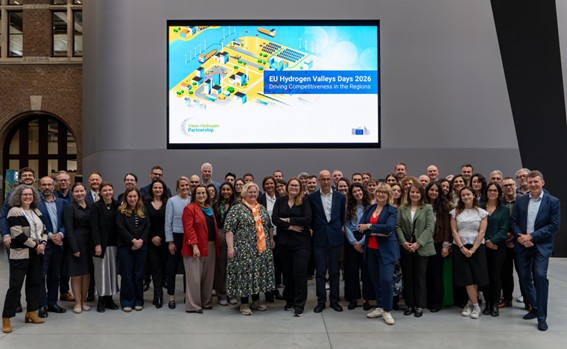
Hydrogen Valleys Days 2026 event at Port House Antwerp - Energy Observer vessel

Hydrogen Valleys Days 2026: How the Antwerp roadmap is accelerating Europe’s clean energy FID

Achieving the Final Investment Decision (FID) has become the definitive hurdle for energy hubs. As the Hydrogen Valleys Days 2026 approaches in Antwerp, the roadmap to securing Hydrogen Valleys FID takes center stage

The Port House of Antwerp-Bruges will host the third edition of the Clean Hydrogen Partnership’s flagship event from May 4–8. This is the definitive summit where «Hydrogen Valleys» transition from technical promises to the primary engine for regional competitiveness in Europe.

The European energy industry has a critical date on its 2026 calendar. Beneath the iconic Zaha Hadid-designed Port House in Antwerp, the Clean Hydrogen Partnership will convene the Hydrogen Valleys Days, a forum designed to transform project roadmaps into tangible industrial realities.

From concept to implementation: The FID challenge

Under the theme “Hydrogen Valleys: An Engine for Competitiveness in the Regions,” the event will gather policymakers, industry titans, and investors with a singular focus: reaching the Final Investment Decision (FID). Europe’s transition to a clean hydrogen economy is no longer measured by feasibility studies, but by the ability to connect valley practitioners with the capital required to scale production.

Register now and join us in Antwerp on 6 May 2026

The Port of Antwerp-Bruges: A living laboratory

The geographic choice is strategic. As one of the world’s largest chemical and logistical hubs, the Port of Antwerp-Bruges (GEO: Antwerp-Bruges) serves as the ideal stage for hydrogen deployment. Throughout the week, attendees will witness the Energy Observer in action—the legendary laboratory catamaran utilizing a full onboard hydrogen energy chain and wind-assisted propulsion, proving that maritime decarbonization is a present-day reality.

A High-Impact industrial agenda

The program stands out for its focus on cross-border collaboration and mobility:

  • Tuesday, May 5: The European Clean Hydrogen Alliance Forum will align industrial priorities with investment perspectives.

  • Thursday, May 7: A strategic workshop on Hydrogen Mobility, co-organized with Japan’s NEDO, will showcase heavy-duty transport applications.

  • Friday, May 8: Technical site visits to real-world installations where the «Hydrogen Territory» concept materializes into pipelines and electrolyzers.


Nordic hydrogen valleys 2026: scaling the 2040 roadmap in Trondheim

The 3rd Nordic Hydrogen Valleys Conference in Trondheim (April 28–29) unites Nordic Energy Research and industry leaders to accelerate the commercial deployment of hydrogen hubs and maritime decarbonization.

The Nordic hydrogen community is reaching a pivotal turning point. This April, Trondheim hosts the Nordic Hydrogen Valleys Conference 2026, a strategic summit where research meets industrial-scale implementation.

The event marks the transition of the Nordic Hydrogen Valleys as Energy Hubs program into a commercial reality. Key sessions will feature findings on H2 safety (H2SIPP) and infrastructure integrity (MatHias), while industry giants like Volvo Group and the Port of Hirtshals discuss heavy transport and maritime decarbonization.

The goal? A definitive «Message of Actions» for the Nordic Council of Ministers to secure the 2040 energy transition.

Register and check the agenda!

NAHV presents new financing pathways and direct grants for SMEs

The upcoming «HE Access to Finance» event on April 16th will unlock cascade funding and strategic support for more than 30 SMEs within the North Adriatic ecosystem.


The implementation of the hydrogen economy in Southern Europe has reached a new operational milestone. The Hydrogen Ecosystem North Adriatic has announced the «HE Access to Finance» event, a strategic gathering scheduled for April 16, 2026, at the Zagreb Innovation Centre (ZICER).

This meeting marks a turning point in the governance of Hydrogen Valleys by bringing together, for the first time in a public and synergistic way, three fundamental initiatives for the region: NAHV, NACHIP, and NASCHA.

A Three-Tiered Financial Architecture

The event is designed not just as a discussion forum, but as a launchpad for concrete financial instruments:

  • NACHIP (North Adriatic Clean Hydrogen Investment Platform): Will host its consortium meeting and officially launch its Capacity Building program, designed to prepare companies for managing complex energy investments.

  • NASCHA (North Adriatic Smart Communities Hydrogen Accelerator): Will present its cascade funding opportunities, highlighting the upcoming Open Call offering direct grants of up to €60,000 per project.

  • NAHV (North Adriatic Hydrogen Valley): As the cornerstone initiative, it provides the overarching structural framework connecting cross-border partners across Croatia, Slovenia, and the Friuli Venezia Giulia region (Italy).

Focus on SMEs: 2026-2027

A core pillar of this event is the commitment to the local business fabric. Through NACHIP and NASCHA, more than 30 SMEs are expected to receive direct funding during the 2026-2027 period. This support aims to lower the barriers to entry for startups and innovators into the green hydrogen value chains, a sector often perceived as capital-intensive.

Who Should Attend?

The call is open to a wide range of actors within the energy ecosystem:

  • SMEs and Startups: From the North Adriatic region interested in cascade funding.

  • Research Institutes and Universities: Entities at the forefront of decarbonization innovation.

  • Regional Stakeholders: Any organization looking to join the most ambitious hydrogen ecosystem in the region.

Event Details:

  • Date: 16 April 2026.

  • Location: ZICER (Zagreb Innovation Centre), Pavilion 12, Zagreb.

  • Objective: Connecting projects with EU financing instruments and facilitating integration into the hydrogen value chain.

  • Register!
HTP Tool Simulation Framework for Hydrogen Valleys Presentation.

HTP Tool: Redefining Techno-Economic Benchmarking for European Hydrogen Valleys

The transition to a decarbonized economy requires more than just ambition; it demands precision. As Hydrogen Valleys emerge as the backbone of Europe’s energy strategy, the ability to simulate and predict their economic viability is paramount.

A Modular Framework for the Hydrogen Value Chain

During the European Hydrogen Energy Conference (EHEC 2026), Alberto Herranz, from the Aragon Hydrogen Foundation, will introduce the Hydrogen Territories Platform Simulation Tool (HTP Tool).

This innovative tool is a modular simulation framework designed specifically for the techno-economic analysis of hydrogen ecosystems. Unlike static models, the HTP Tool integrates:

  • Full Value Chain Coverage: From renewable production to final storage and distribution.

  • European Project Synergy: It leverages the collective knowledge generated by various EU-funded initiatives.

  • Scalable Architecture: Designed to adapt to different territorial scales and industrial demands.

When and Where to Attend at EHEC 2026

For stakeholders, investors, and engineers looking to de-risk hydrogen investments, this session is a critical milestone.

  • Presenter: Alberto Herranz (Consultancy and Training Technician).

  • Session: Market and Techno-economics Analysis.

  • Location: Room G.

  • Schedule: Friday, March 13th, 12:30 – 12:50.

  • The HTP Tool transforms complex data into strategic roadmaps, ensuring that Hydrogen Valleys are not only sustainable but also economically profitable.

Aleksander Gerbec ECUBES presenting NAHV 2.0 at Carinthian Hydrogen Summit 2026

Bridging Borders for Energy Sovereignty: Aleksander Gerbec Unveils NAHV 2.0 at the 4th Carinthian Hydrogen Summit

In the lakeside setting of Klagenfurt am Wörthersee, the discourse around the European energy transition shifted from theory to infrastructure. During the 4th Carinthian Hydrogen Summit, Aleksander Gerbec, CEO of ECUBES, presented a masterclass on cross-border synergy: the North Adriatic Hydrogen Valley (NAHV) 2.0.

The NAHV as a Catalyst for Energy-Independent Business

Under the evocative title «Hydrogen Valley as a Catalyst for Energy-Independent Business Locations,» Gerbec’s keynote addressed a room of international decision-makers. He articulated the NAHV not merely as a project, but as a pioneering ecosystem—a seamless value chain integrating renewable production, strategic storage, and high-impact applications in heavy industry and mobility.

Transnational Cooperation: Carinthia and the North Adriatic Sea

The summit’s political weight was solidified by the signing of a Memorandum of Cooperation between Gerbec and Provincial Councillor Sebastian Schuschnig. This alliance between the Carinthian Regional Government and the North Adriatic region represents a significant step toward European clean energy competitiveness. As highlighted by experts like Judith Neyer and Wolfgang Anzengruber, the resilience of regional economies now depends on the maturity of these hydrogen corridors.

Discover more!

BalticSeaH2 Valley hydrogen podcast series cover art - Hydrogen Territories Platform

BalticSeaH2 Valley Launches Podcast Series to Chronicle the Future of European Hydrogen Hubs

As Europe accelerates its path toward carbon neutrality, the BalticSeaH2 Valley project has launched a specialized podcast series, providing an in-depth look at the development of the continent’s first major cross-border hydrogen valley.

The initiative, which involves over 40 partners across the Baltic Sea region, aims to create an integrated hydrogen economy. This new audio platform serves as a digital chronicle, capturing the voices of engineers, policy experts, and industrial leaders who are navigating the complexities of the green transition.

A Blueprint for Regional Cooperation The episodes explore the multifaceted nature of the project—from the technical challenges of hydrogen storage and transport to the socio-economic impact on local communities. By sharing these insights, BalticSeaH2 is not only documenting its own progress but also providing a scalable roadmap for other emerging «Hydrogen Valleys» across Europe, including the strategic corridors supported by the Hydrogen Territories Platform.

Why it Matters For stakeholders in the Aragon region and beyond, the BalticSeaH2 experience offers vital lessons in cross-border regulatory alignment and infrastructure interoperability. As the hydrogen market matures, these narratives become essential tools for transparency and knowledge transfer.

The podcast is now available on the official project website and major streaming platforms.

Read more and listen: https://balticseah2valley.eu/podcast/

Project partners meeting in Gothenburg for the Swedish Hydrogen Valley kick-off under the Clean Hydrogen Partnership.

Sweden launches new hydrogen valley project during Kick-off Meeting in Gothenburg

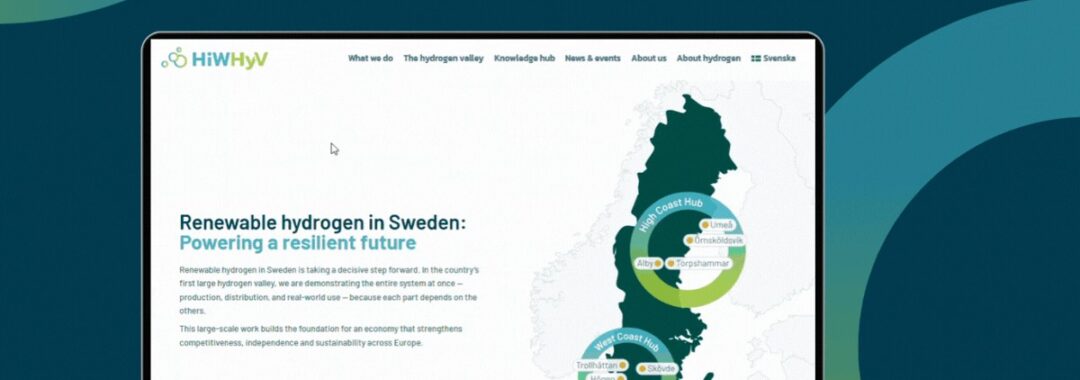
The European hydrogen ecosystem continues to expand its reach. This month marks the official start of the project to establish a strategic Hydrogen Valley in Sweden, the High Coast to West Coast Hydrogen Valley (HiWhyV ), a key initiative aimed at accelerating the clean energy transition in the Nordic region.

The kick-off meeting took place in Gothenburg, where consortium partners gathered to outline the roadmap for the coming months. Funded by the Clean Hydrogen Partnership, this project officially joins the growing family of European Hydrogen Valleys, strengthening the collaborative network promoted by the Hydrogen Territories Platform.

Beyond technical planning, the meeting embraced the local ‘Fika’ culture to foster strong cooperation among partners. The project focuses on integrating hydrogen production and application into the regional industrial fabric. «We are highly motivated to map out this cooperation and start delivering results,» the team stated. The project is now moving from vision to action, marking a milestone for Sweden’s sustainable future.

Now available: HEAVENN webinar replay – Building confidence in underground hydrogen storage (UHS)

On December 17, 2025, the HEAVENN project hosted a high-level webinar titled “Confidence in Underground Hydrogen Storage (UHS) in Zuidwending, The Netherlands.” The session explored how real-world operational experience serves as the foundation for public trust—one of the most critical success factors for the global scale-up of hydrogen.

The webinar replay is now available for all platform members and hydrogen stakeholders.

Why Underground Storage is a Game-Changer

For hydrogen territories to thrive, large-scale and long-duration storage is essential. As highlighted by Eddy Kuperus (Gasunie), underground options like salt caverns provide the necessary volume to balance renewable energy variability and ensure security of supply, moving beyond simple short-term buffering to true system-wide stability.

Key Insights from the Session

The webinar delved into the technical and strategic lessons learned from the Zuidwending pilot project:

  • Safety & Standards: While hydrogen behaves differently than natural gas (lower ignition energy and different material compatibility), the pilot confirmed that it can be stored safely using similar methodologies.

  • The Zuidwending Pilot: Since 2018, Gasunie has tested cavern integrity and operational procedures. The findings reveal no technical «deal-breakers,» proving that large-scale storage is feasible today.

  • Hydrogen Quality: An ongoing debate remains regarding European standards for purity, especially when repurposing existing assets.

  • The «Confidence Quadrant»: Success isn’t just about technology. It requires a balance of four pillars: Technical reliability, Governmental support, Economic viability, and Societal acceptance.

«Technical feasibility is the baseline, but public trust is built through governance, transparency, and clear communication of safety and benefits.» — Eddy Kuperus, Gasunie.

Watch the Replay

Whether you are a project developer, policymaker, or researcher, the lessons shared in this session are highly transferable to hydrogen infrastructure projects worldwide.

Keynote session at III Basque Hydrogen Research Day 2026

III Basque Hydrogen Research Day: R&D Innovation and 2030 Roadmap

The Bilbao Exhibition Centre (BEC) will host the third edition of the Basque Hydrogen Research Day on January 23, 2026. This strategic encounter connects industrial R&D leaders with major research consortia to accelerate the European energy transition.

The Basque hydrogen ecosystem is gearing up for a pivotal technical session focused on bridging the gap between scientific discovery and industrial application. The event, supported by the Basque Government, will feature high-level insights from the Clean Hydrogen Partnership (CHP) and Enagás Renovable.

Strategic European Support and Real-World Deployment

The keynote address by Antonio Aguilo (CHP) will outline the current framework of European support for hydrogen R&D. Following this, the Green Hysland project—a pioneer in Mallorca—will be presented by Enagás Renovable as a successful model for deploying integrated hydrogen ecosystems in Europe.

A key highlight for regional strategy will be the unveiling of the Euskadi 2030 Renewable Fuels Technological Roadmap, presented by the EIC Foundation, setting the path for the next decade of decarbonization.

Elkartek Workshops: Solving Technological Bottlenecks

The core of the technical transfer will take place in three parallel workshops focused on the results of the Elkartek collaborative research program:

  • IRAUNKOR (Electrolysis): Led by TEKNIKER, analyzing stack degradation to improve durability.

  • SINTETIK (Synthetic Fuels): Led by TECNALIA, focused on the production of renewable syngas, methane, methanol, and ammonia.

  • H2MAT+ (Materials): Led by Mondragon Unibertsitatea (MU), investigating the behavior of metallic structures under hydrogen service conditions.

Register now!

Banner for the Second Open Day of NACHIP North Adriatic Clean Hydrogen Investment Platform 2026

Second NACHIP Open Day: Expert guidance for hydrogen SMEs and innovation projects

Following the initial interest in the North Adriatic Clean Hydrogen Investment Platform (NACHIP), we are pleased to announce the Second Open Day for the NACHIP Open Call, scheduled for 15 January 2026 at 14:30 (CET) via Zoom.

This session is specifically designed to support SMEs developing innovative hydrogen solutions under the I3 Instrument framework. NACHIP provides cascade funding to accelerate the testing, validation, and integration of technologies within real operational environments, focusing on key value chains such as mobility, storage, advanced materials, and urban energy systems.

Why attend the Second Open Day? Based on the inquiries received since the launch of the call, this second edition aims to provide:

  • Detailed clarification: Further insights into eligibility requirements and funded activities.

  • Process guidance: A step-by-step look at the application process to ensure submission quality.

  • Expert Q&A: Answers to previously submitted questions and live collection of new inquiries during the session.

Event Details:

  • Date: 15 January 2026

  • Time: 14:30 CET

  • Format: Online (Zoom)

  • Registration: Register here

Potential applicants can submit questions in advance to nachip@meta-group.com. All technical answers will be published in writing on the official website following the meeting.

FAQ: NACHIP Open Call & Second Open Day

1. Who can apply for the NACHIP Open Call? The call is specifically designed for SMEs (Small and Medium-sized Enterprises) that are developing innovative solutions within the hydrogen value chain, particularly those integrated or linked to the North Adriatic ecosystem.

2. What type of projects are eligible for cascade funding? NACHIP supports projects focused on the testing, validation, and integration of hydrogen technologies in real operational environments. This includes mobility, storage, advanced materials, and digital energy optimization.

3. Is the Second Open Day mandatory for applicants? No, but it is highly recommended. This session provides additional clarification on eligibility requirements and funded activities based on the questions received since the launch.

4. How do I register for the online session on January 15? You can register directly through the official NACHIP platform at https://www.nachip.eu/open-calls/open-day/. The event will be held via Zoom at 14:30 CET.

5. Can I submit questions if I cannot attend the live meeting? Yes. You can send your technical inquiries in advance to nachip@meta-group.com. All answers will be published in writing on the website after the session.