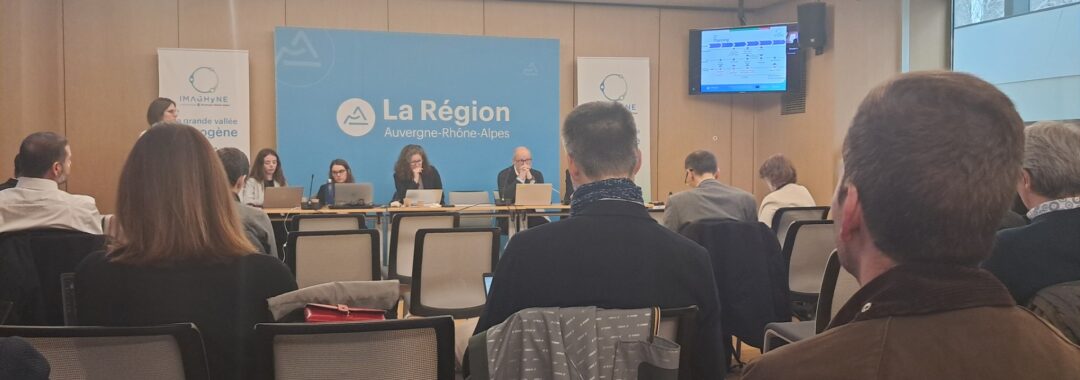
IMAGHyNE project partners during the 4th General Assembly meeting at Hôtel de Région Auvergne-Rhône-Alpes in Lyon, France.

IMAGHyNE sets new strategic roadmap at 4th General Assembly in Lyon

The 4th General Assembly of the IMAGHyNE project took place on December 16th at the Hôtel de Région Auvergne-Rhône-Alpes. This key meeting brought together a consortium of 25 international partners to redefine the strategic trajectory of the Hydrogen Valley initiative following the October 2025 mid-term review.

The assembly focused on a core project restructuring, establishing a collective vision to overcome current sector challenges. Key highlights included the commitment to transparency and the alignment of individual actions with the overarching goals of the Clean Hydrogen Partnership. The roadmap now emphasizes the acceleration of hydrogen adoption across regional territories to maintain the momentum of the European energy transition.

The event concluded with an on-site technical visit to Hyliko’s workshops in St Priest, showcasing innovative solutions for hydrogen-powered heavy-duty vehicles. IMAGHyNE continues to lead the way in creating integrated hydrogen ecosystems, ensuring that clean energy remains a cornerstone of the future European energy mix.

hydrogen-valley-hydrogen-territory-baltic-aragon-hydrogen-foundation

Announcement of preliminary funding decisions for renewable hydrogen initiatives

The initial stage of funding allocation has been completed for projects focused on renewable hydrogen clusters and valleys. Out of the total applications, 7 projects have been selected, which include 11 hydrogen production plants. These projects have been earmarked to receive 1,214 million euros in funding to support the development of renewable hydrogen production.

Upon completion in 2028, these 11 plants will collectively provide close to 2.3 gigawatts of electrolysis capacity.

In the evaluation process, the primary consideration was to identify and support those projects that demonstrated the highest efficiency in their use of public funds relative to their electrolysis capacity. However, the selection also took into account a range of additional factors, including technical, socio-economic, and environmental aspects. This encompassed an assessment of the applicants’ financial stability, their previous experience, and the advancement level of their proposed projects. Furthermore, extra points were granted to those projects that incorporated educational components in partnership with academic and vocational institutions, as well as those committing to investments in research, development, and innovation (R&D&I).

The funded projects are anticipated to generate approximately 9,000 direct employment opportunities and an additional 10,000 indirect jobs. Special emphasis was placed on supporting projects that enhance the technological and industrial self-sufficiency of Europe, with a requirement that over 90% of the electrolyzers used be sourced from European manufacturers.

It is important to note that the list of selected projects may be subject to change. The allocation of funds will remain provisional until the final list of awardees is officially published.

Discover more!